In This Article
-
Leads Come From Everywhere. That's the Problem.
-
Duplicate Leads Are a Silent Conversion Killer
-
Fixing This Starts With Better Questions, Not More Data
-
Why This Matters More Than Lead Generation
-
What Swiftex Is Doing About It
-
FAQs
Most businesses assume their biggest sales problem is generating enough leads. It usually isn't.
Across sales teams, dealerships, and enterprise customers, the same pattern shows up again and again: leads are flowing in from every direction, but very few of them are actually getting converted. The real issue sits after the lead enters the system, in what happens next.
This is lead leakage, and it's quietly costing dealerships and enterprise sales teams far more than a slow lead generation month ever could.
Leads Come From Everywhere. That's the Problem.
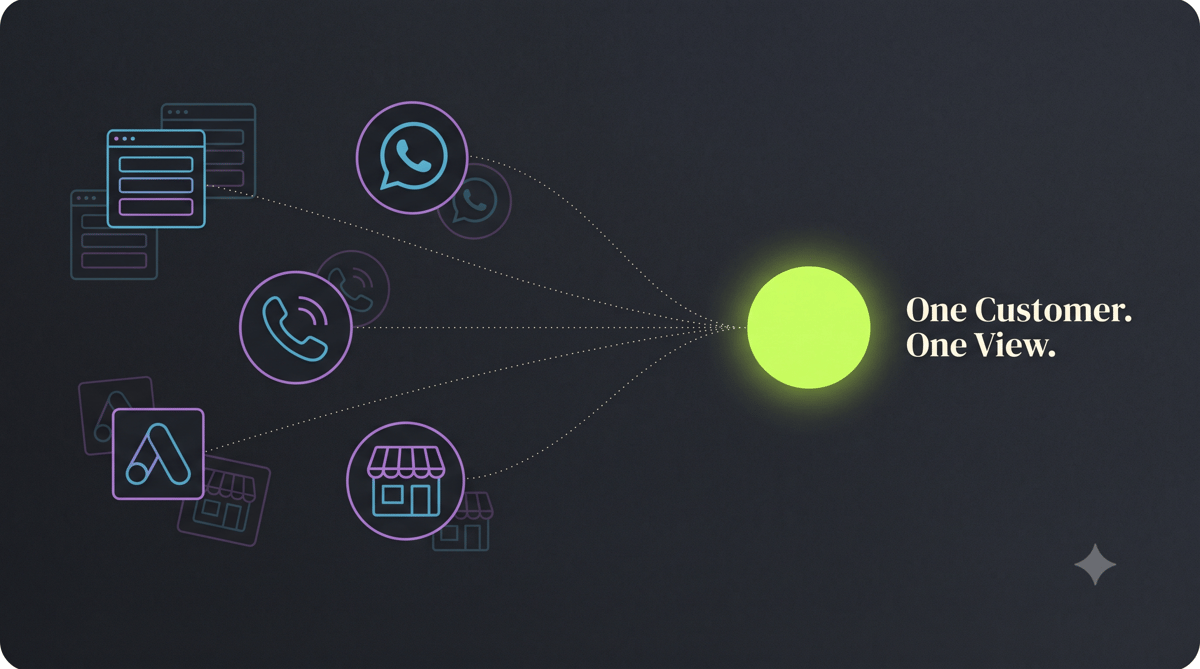
Today's buyers don't follow one path to a dealership. A single customer might:
● Fill out a website form
● Click a Google or Meta ad
● Message on WhatsApp
● Call the contact center
● Walk into a showroom
● Come through a partner portal or third-party aggregator
Each of these channels does its job well on its own. The trouble starts when they don't talk to each other. A customer researching a vehicle might submit an online enquiry, call the dealership the next day, and visit in person a week later, and most systems will log this as three separate leads instead of one customer journey.
Duplicate Leads Are a Silent Conversion Killer
When the same customer enters the system multiple times, the damage compounds quickly:
● Multiple sales agents unknowingly contact the same person, creating a disjointed and frustrating experience
● Reporting becomes unreliable, since the same buyer is counted as several separate opportunities
● Response times slow down as teams sort through duplicate records instead of following up
● Sales teams lose visibility into what actually happened earlier in the journey
None of this shows up as a "lost lead" in a dashboard. It shows up as a lead that technically existed, technically got a response, and still walked away.
Fixing This Starts With Better Questions, Not More Data
The instinct is often to capture more information. The better approach is to ask better questions the moment a lead enters the system:
● Is this genuinely a new lead, or an existing customer reappearing through a new channel?
● Which source deserves attribution for this interaction?
● Should this create a new record, or enrich an existing one?
● How do we build a single, reliable view of this customer across every touchpoint?Simple phone number or email matching isn't enough here, because real customer journeys rarely move in a straight line. Getting this right requires looking at behavior and context across channels, not just matching a single data field.
Why This Matters More Than Lead Generation
Good lead management doesn't begin at lead assignment. It begins with data quality at the point of capture. If that foundation is broken, everything built on top of it, automation, AI-driven engagement, dashboards, and analytics, inherits the same unreliability.
This is the gap agentic mid-funnel automation is built to close.
What Swiftex Is Doing About It
At Swiftex, we've been building our AI-powered Lead Management System around this exact problem: closing the gap between when a lead is captured and when a sales agent actually engages with it.
That work starts at ingestion. Instead of treating every inbound signal, a form fill, a WhatsApp message, a call, a walk-in, as a standalone event, Swiftex looks at each new interaction and asks the same questions a good sales ops team would ask manually: Is this really a new lead? Has this customer shown up before, under a different channel? Which source should get credit? Should this enrich an existing record instead of creating a new one?
Answering those questions reliably means going beyond basic phone number or email matching, since real customer journeys move across channels in ways a single data field can't capture. Swiftex's deduplication layer is built to recognize the same customer across a website enquiry, a call, and a showroom visit, and merge that activity into one unified record instead of three disconnected ones.
The outcome for sales teams is a single customer view from the first touch onward: no duplicate outreach, no guessing which agent already spoke to a lead, and accurate attribution back to the channel that actually drove the interaction. That's the foundation Swiftex is building on before layering in AI-powered engagement, dashboards, and analytics, because none of that is trustworthy if the lead data underneath it is fragmented.
Every lead. Every channel. Zero leakage. That's the standard we're building Swiftex to meet.
Stop Losing Deals You Already Won
Every lead you're chasing twice, or not chasing fast enough, is a deal that was already yours to lose. Swiftex closes the gap between lead capture and conversion, so your sales team stops untangling duplicates and starts having the conversations that actually close.
Frequently Asked Questions
What is lead leakage? +
How is lead leakage different from a lead generation problem? +
Lead generation is about the volume of inquiries coming in. Lead leakage happens after that point, when a real, already-captured customer inquiry fails to convert because of process or system gaps rather than a lack of interest.
Why do duplicate leads happen across sales channels? +
Duplicate leads occur when the same customer interacts through multiple channels, such as a website form, a phone call, and a walk-in visit, and the system logs each interaction as a separate, unconnected lead instead of recognizing it as one customer journey.
Can simple phone number or email matching solve lead deduplication? +
Not reliably. Customer journeys are rarely linear, so basic field matching often misses genuine duplicates or incorrectly merges unrelated leads. Effective deduplication needs to account for behavior and context across channels, not just a single identifier.
What is agentic mid-funnel automation? +
Agentic mid-funnel automation refers to AI-driven systems that manage the stage between lead capture and sales handoff, unifying leads across channels, deduplicating records intelligently, and maintaining a single customer view so sales teams engage with accurate, complete information.
How does fixing lead leakage improve sales team performance? +
When leads are captured accurately and duplicates are eliminated at the source, sales teams spend less time untangling records and more time on genuine conversations, which improves response times, reporting accuracy, and ultimately conversion rates.